Land management built for the capital region
The Sacramento Valley sits at the meeting point of grassland, oak woodland, and the rising foothills of the Sierra. That mix is what makes the area beautiful. It's also what makes vegetation management complicated. Properties on the city's edge transition quickly into wildland-urban interface zones, and the fire risk profile changes within a few miles.
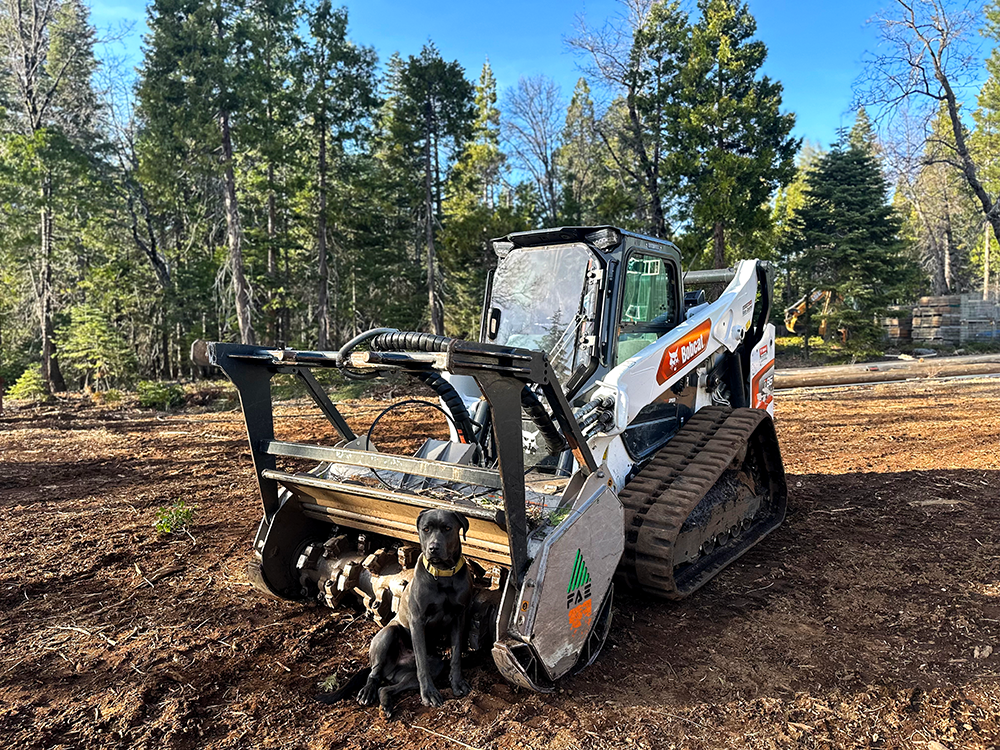
Our crews work across the capital region with equipment scaled to the property. A residential lot inside Sacramento city limits needs different attention than a five-acre parcel in the foothills east of town. We bring the right approach to each.
Why the area needs serious vegetation work
Summers run hot and long here. From late May through October, the valley sees triple-digit days and weeks without rain. Annual grasses cure quickly, oak leaf litter accumulates, and the dry north winds that occasionally push down from the Sierra create conditions that have produced some of the state's most consequential fires.
Properties along the American River corridor, in the El Dorado Hills, around Folsom Lake, and through the Placerville-bound foothills carry the highest risk. The City of Sacramento and surrounding county authorities have steadily expanded their vegetation enforcement, and homeowners feel the pressure both from inspectors and from insurance carriers.
What we do for capital region properties
Brush Clearing
Selective removal that respects native oaks and the soil structure underneath.
Fire Prevention
Strategic fuel reduction matched to local wind patterns and terrain.
Full Removal
Cut, haul, and dispose work for properties with heavy accumulation.
Defensible Space
Code-compliant work with documentation insurance carriers want.
Local conditions that shape our approach
Valley properties typically have foothill exposure on at least one side, mature oaks worth protecting, and seasonal grass that needs annual attention. The challenge here isn't always heavy brush. Often it's the combination of dry grass, accumulated oak litter, and overgrown landscape plants too close to structures.
Our arborists are particularly careful around the native blue and valley oaks that define the region's character. These trees are protected in many local jurisdictions and represent decades of growth. We work around them, not through them.
How we time work in the valley
February through April is the productive window for most properties here. The soil is still soft enough to work without dust, vegetation is identifiable, and we're well ahead of fire restrictions. By May, we shift toward fire-prevention priority work and pre-inspection cleanups. Summer heat limits what we'll attempt safely, both for crew health and to avoid spark risk.
The Placer County and Sacramento County fire authorities publish annual reminders about defensible space deadlines. We track these and reach out to existing clients before their renewal windows.
Vineyards, ranches, and rural estates
Beyond residential, the foothills east and north of the capital host working vineyards, ranches, and rural estates that need ongoing management. We handle row maintenance, riparian buffer work, oak release projects, and post-harvest cleanup. Each property gets a custom plan rather than a template service.
What it costs in the region
Residential brush clearing in the capital region typically runs $600 to $3,500 depending on lot size, terrain, and fuel density. Full defensible space packages for foothill properties run $1,500 to $6,000 with documentation. Larger estates, vineyards, and multi-parcel projects are quoted individually. We provide free on-site walks and written estimates so you see the real number before booking.
Why local homeowners call us
We're based here. Our crews live in the region we serve, we know the inspectors, we understand which insurance carriers want what, and we have a track record with the local fire-safe councils. More than that, we treat properties the way the people who live on them want them treated: carefully, with the long view in mind.
For additional context on regional vegetation guidelines, the Sacramento Metro Chamber directs members to local resources, and the civic history of the area shows just how much the wildland-urban edge has expanded over the past few decades.