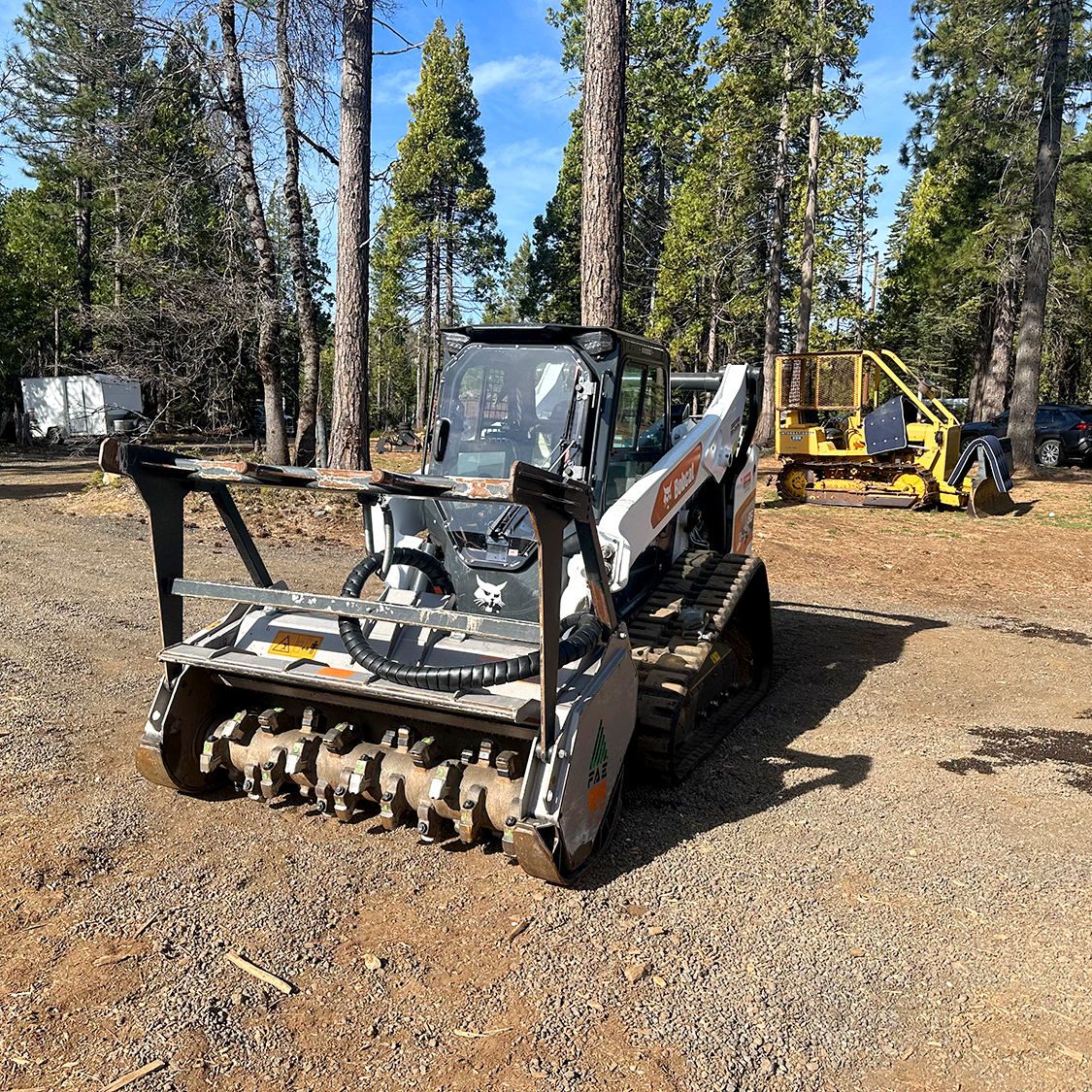
The job of fire prevention clearing
Fire prevention brush clearing is not about removing every plant within sight of a structure. It's about breaking the chain that lets a wildfire move from ground fuel to ladder fuel to canopy to your roof. The work is strategic, zoned, and grounded in how fire actually travels.
The goal is simple: give firefighters a chance to defend the property, give embers fewer landing pads, and slow flame spread long enough for you and your family to leave safely. This is what the state means by defensible space, and California has codified it into law under Public Resources Code 4291.
Why it matters now: California insurance carriers have non-renewed hundreds of thousands of policies in fire-prone areas since 2020. Most non-renewals cite vegetation conditions. Proper fire prevention clearing is now an insurance issue, not just a safety issue.
The three zones of defensible space
California's defensible space code divides the 100 feet around any structure into three zones, each with different goals and rules.
Zone 0: Ember Resistant
The newest zone in California code. No combustible mulch, no plants against siding, no woodpiles. The first five feet of any structure should resist ember intrusion completely.
Zone 1: Lean and Clean
Spacing between shrubs and trees, no ladder fuels under canopies, dry grass cut short, gutters and roofs free of debris. The most aggressive removal happens here.
Zone 2: Reduce Fuels
Grass kept low, separation between shrub clumps, dead material removed. Some healthy vegetation stays for soil and habitat, but fire ladders are broken up.
Why this is more than mowing
Plenty of operators show up with a brush mower and call it defensible space. That's not how this works. Effective fire prevention requires identifying which trees create ladder fuel, where ember traps exist, how wind moves through the property, and how vegetation will regrow after treatment.
Our crews include arborists who understand crown spacing, hand crews trained on ember-zone detailing, and operators who run equipment without scarring slopes that need their root systems to prevent erosion.
What it costs to do right
Residential fire prevention clearing in California typically runs $1,000 to $6,000 depending on lot size, slope, fuel density, and how far behind the property is. Properties that have been maintained annually cost dramatically less to keep up. Properties that have been neglected for years require more upfront work and produce more debris.
We provide written estimates with itemized scopes after a free site walk. You'll see exactly what's being treated and why.
Insurance, inspections, and documentation
We document our work with before-and-after photos, mapped zones, and written scope summaries that satisfy most insurance carriers and CAL FIRE inspectors. If you've received an inspection notice, vegetation flag, or non-renewal warning, bring it to your site walk. We've worked with most carriers operating in California and know what they want to see.
For homeowner-side education, the Ready for Wildfire program publishes the same standards we work from, in plain language.
Timing matters in California
The best time for fire prevention clearing is late winter through early spring, before vegetation peaks and before fire restrictions tighten. Tahoe and Sierra properties run on a later calendar than the Central Coast. We can start work in February in some regions and not until May in others. Booking early secures your spot in the schedule that works for your climate zone.
Why Coyote Brush
We're not the brand with the loudest ads or the biggest truck fleet. We're a focused crew of arborists and horticulturalists who care about California land and the people who live on it. Our fire prevention work meets state code, satisfies insurance underwriters, and respects the property as a long-term asset, not a one-time job.